Roofs finished in resin tile
Why resin tiles keep replacing traditional tiles: clay, cement and metal roofing is heavy, prone to cracking, slow to lay, quick to rust, poor at keeping heat out and loud in the rain. Resin tiles answer those pain points. They are light yet strong, corrosion proof, crack resistant, sound and heat insulating, quick to install and cost effective. Below are applications from the range.
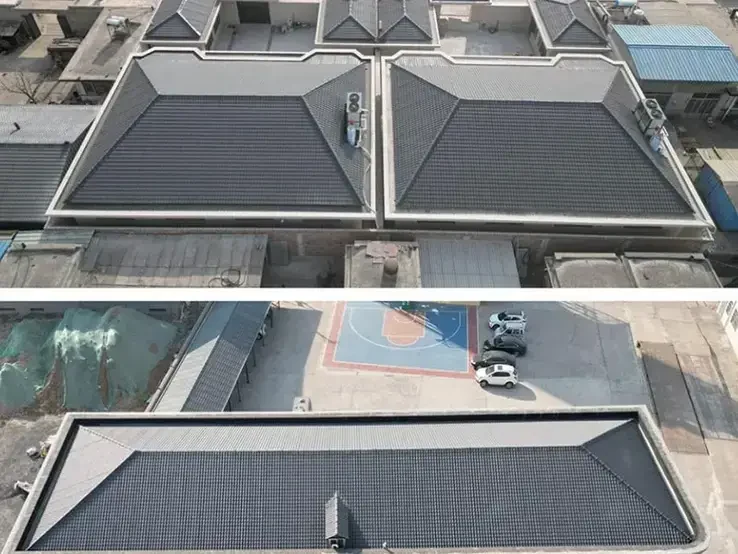
New rural renovation
Aerial view of dark grey pitched roofs re tiled in resin tiles. The light tile body keeps the load low on an existing structure while the roof reads as a traditional pitched roof from the ground.
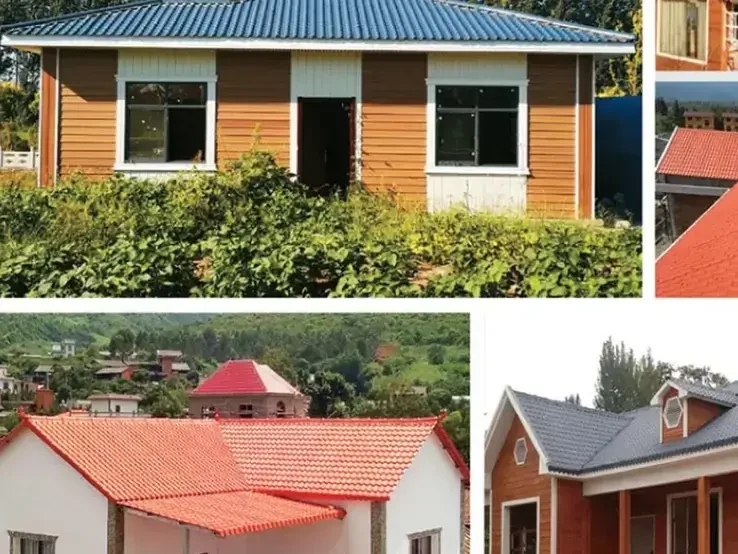
Integrated roofing
Resin tiles on light steel integrated houses, in blue, red and grey roofs. One tile system across a whole housing scheme, with each home taking its own colour.
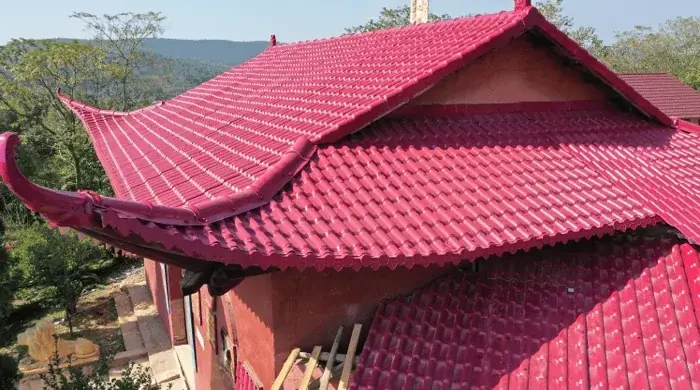
Antique style roof
Red antique profile resin tiles on a traditional style roof with upturned eaves. The Roman profile carries the classic curved tile line, and the matching ridge and eave pieces finish the detail.
More applications
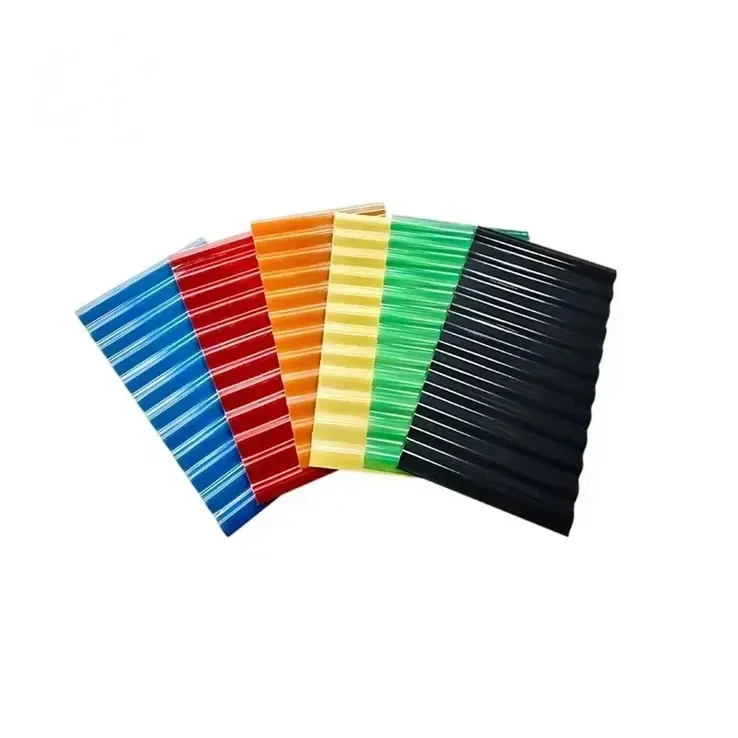
Corrugated wave sheets
Wave profile sheets in the standard colour range, for roofs and cladding that take the corrugated line.
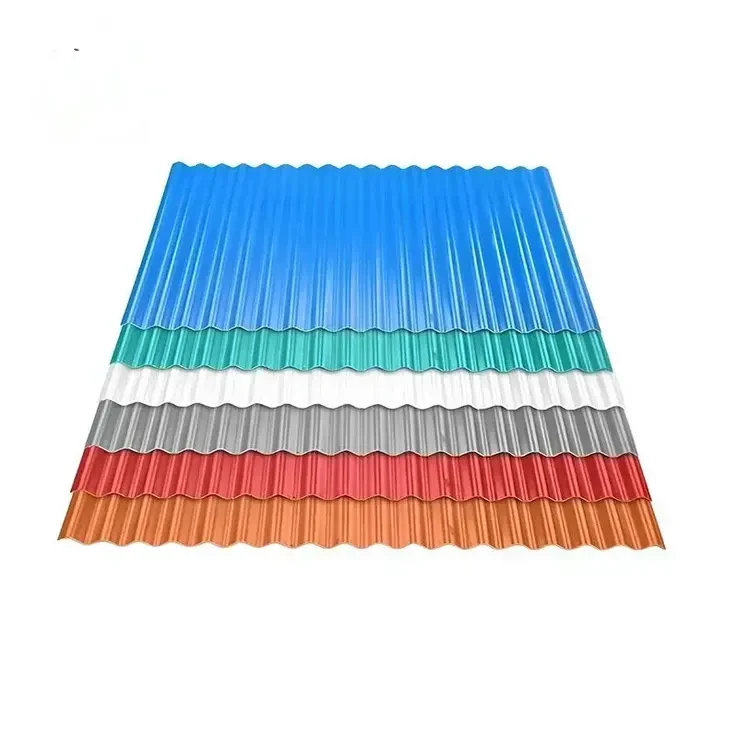
Wave sheets, stacked
Corrugated profile in blue, green, white, grey, red and terracotta.
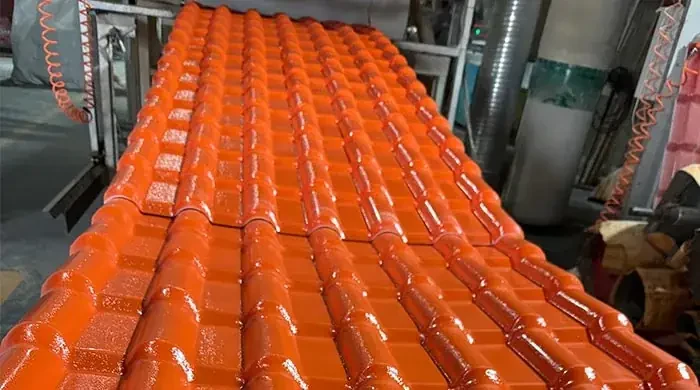
Bamboo joint pattern tiles
Segmented Roman tiles in orange, on the line. The bamboo joint pattern gives the roof a stepped rhythm across each length.
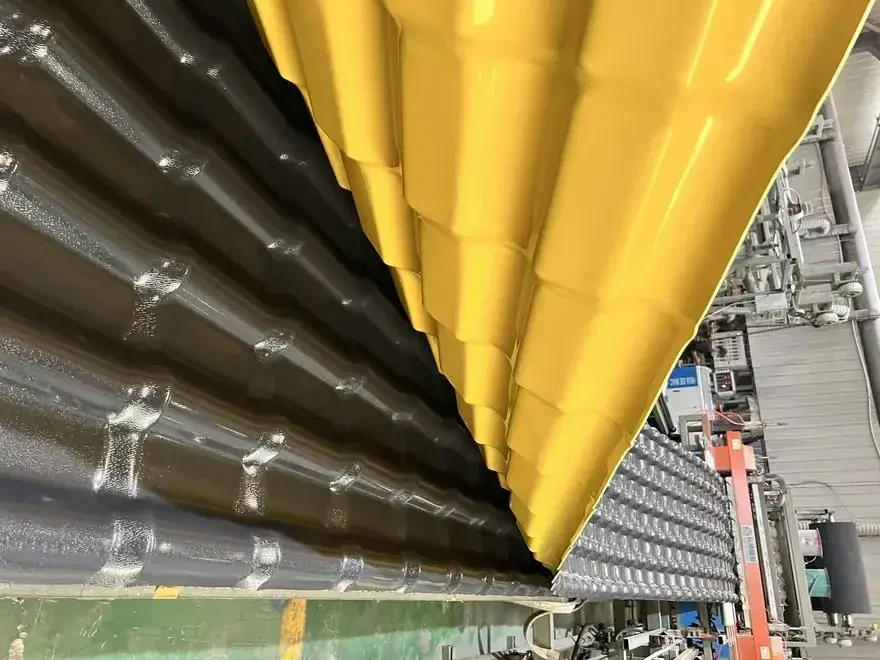
Colours run to order
Yellow and dark grey tiles stacked in the workshop. Project colours are produced to order, so a scheme can carry one colour or several.
Where these roofs work
Houses and housing projects
The Roman tile at residential scale, light on the structure and quiet in rain, with the full ridge and flashing set.
Resorts and farm buildings
The antique curved tile look with none of the weight or breakage of clay, in colours that hold under strong sun.
Warehouses and industrial roofs
Trapezoidal sheets at wide coverage, corrosion resistant even in coastal or chemical air, and quick to install.
Renovation and re roofing
Dark grey pitched roofs re tiled over existing structures, as in the rural renovation case above.